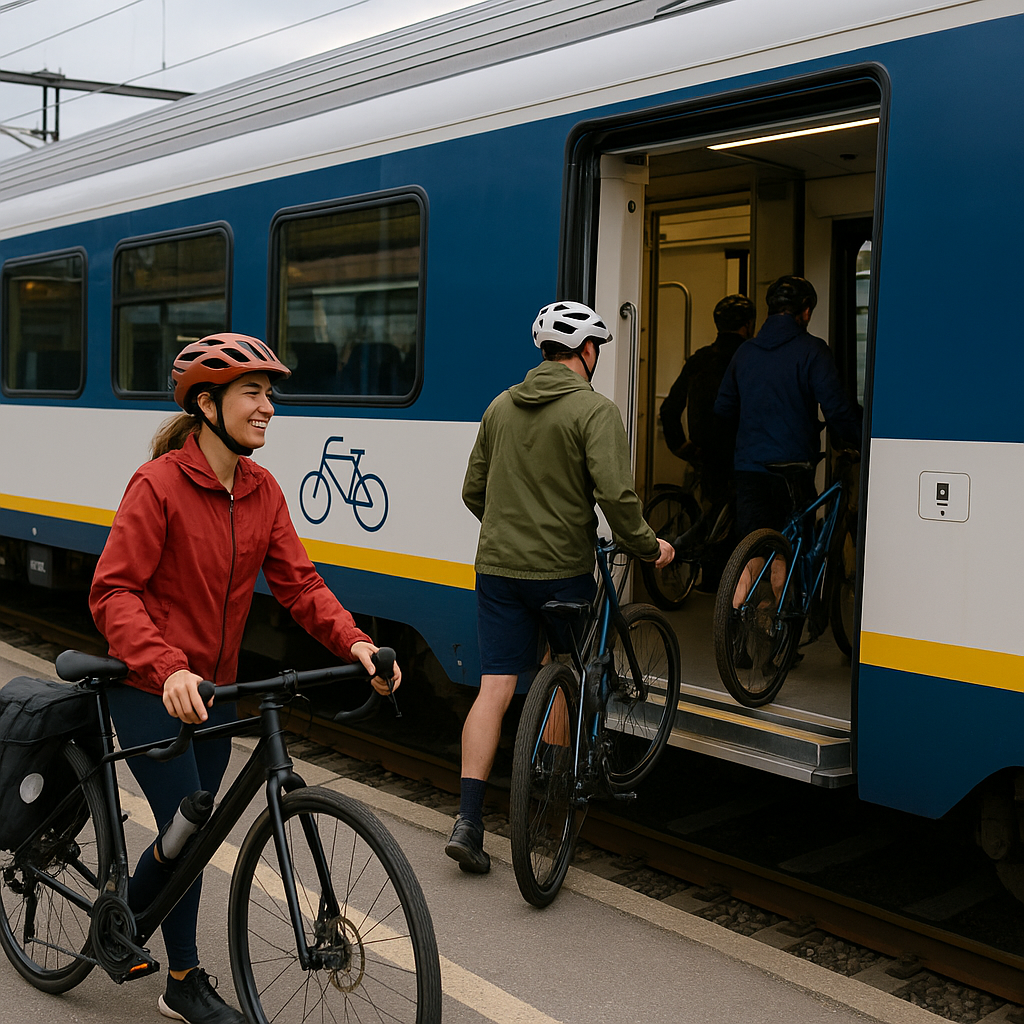
Combining train travel with cycling is one of the most stress‑free ways to explore Europe. High‑speed and regional rail networks whisk you and your bike directly into the heart of a destination, letting you start riding without the hassle of airports or long drives. Travelling by train also lowers your carbon footprint and allows you to enjoy the scenery while you glide toward the trailhead.
Why trains and bikes make a perfect pair: Modern rail operators increasingly accommodate cyclists with dedicated bike carriages or racks. While many trains carry bikes for free, spaces can be limited and often require a reservation, so it’s essential to plan ahead and arrive early. Always check the operator’s specific rules, as some routes don’t allow non‑folding bikes during peak hours.
Top train‑accessible cycling routes for 2025
- Train Vélo Loire, France: This special service along the Loire River carries up to 83 bicycles and links towns along the Loire à Vélo cycle route. Hop off at riverside villages to explore châteaux and vineyards, then roll your bike back on board for the return trip.
- Mallnitz–Böckstein shuttle, Austria: The Tauern Railway tunnel shuttle dedicates an entire carriage to bicycles, providing a safe and easy way to cross the Alps and connect with the Tauern Cycle Path and Alpe‑Adria route.
- UK routes: Britain’s rail system still carries bikes free of charge and opens up countless adventures. Take the train to Barnstaple for the traffic‑free Tarka Trail in Devon, ride through Scottish Highlands on the North Coast 500 starting from Inverness, or pedal portions of the Celtic Trail along Wales’ coastal railways. Seats are limited on popular lines, so reserve a bike space when booking.
- Other European trails: Beyond the classics, 2025 trends point toward gravel‑friendly routes like the Pirinexus loop between Spain and France or Iceland’s Westfjords Way. Reaching these remote areas often involves a combination of regional trains and ferry services – a unique and rewarding multimodal journey.
To make the most of train-and-bike adventures, travel outside rush hours, pack light or use a folding bike, and carry essential tools so you can handle minor repairs on the road. With thoughtful planning and respect for fellow passengers, you can discover some of Europe’s most inspiring landscapes while letting the train do the hard work between rides.
For more route inspiration, check out our European Bike Tours: Best Routes and Planning Tips for 2025