

# Essential Bicycle Maintenance: Your Complete Schedule for Peak Performance
Regular bicycle maintenance ensures safety, extends equipment life, improves performance, and prevents costly repairs while building mechanical knowledge that enhances cycling independence and confidence. This comprehensive maintenance schedule provides systematic approaches to keeping your bicycle in optimal condition through consistent care routines that address both safety-critical components and performance optimization.
## Daily Pre-Ride Safety Checks
Developing consistent pre-ride inspection habits creates a foundation for safe cycling while identifying potential issues before they become safety hazards or expensive repairs during rides.
**Quick Visual and Functional Inspection**
Before each ride, perform a quick visual inspection that checks for obvious damage, loose components, or safety hazards that could affect ride safety or performance. Look for cracked frames, loose bolts, damaged cables, or other visible issues that require attention before riding.
Check tire condition and pressure, ensuring adequate inflation for planned riding conditions while looking for cuts, embedded debris, or excessive wear that could cause punctures or handling problems during rides. Many punctures result from gradual tire pressure loss that allows debris penetration.
**Essential Safety Systems Check**
Test brake function by squeezing levers and checking for firm feel, adequate pad engagement, and proper stopping power. Loose or ineffective brakes represent immediate safety hazards that must be addressed before riding, regardless of other maintenance schedules.
Spin wheels to check for wobbles, brake rub, or other irregularities that affect performance or safety. Minor wheel issues often worsen quickly and can cause sudden failures if not addressed promptly through professional wheel service or replacement.
**Drive Train Function Verification**
Lift the rear wheel and pedal through all gears, checking for smooth shifting, proper chain engagement, and absence of skipping or grinding sounds that indicate adjustment needs or component wear requiring attention.
These quick checks take less than two minutes but prevent most mechanical failures that occur during rides while building familiarity with your bicycle’s normal operation that helps identify developing problems early.
## Weekly Maintenance Routines
Weekly maintenance routines address components that require regular attention while providing opportunities for more thorough inspection and preventive care that maintains optimal performance between major service intervals.
**Chain Care and Drive Train Cleaning**
Clean and lubricate the chain weekly or after riding in wet, dusty, or muddy conditions that accelerate wear and reduce performance. A clean, properly lubricated chain reduces wear on expensive components while ensuring smooth shifting and efficient power transfer.
Use appropriate degreasers and lubricants for your riding conditions and climate, applying lubricant sparingly to avoid attracting dirt while ensuring adequate protection for chain links and moving parts. Wipe excess lubricant to prevent dirt accumulation.
**Tire and Wheel Inspection**
Inspect tires thoroughly for cuts, embedded debris, uneven wear patterns, or other damage that could cause sudden failures. Remove small stones, glass, or other debris embedded in tire treads before they work deeper and cause punctures.
Check spoke tension by squeezing parallel spokes together, feeling for loose spokes that indicate developing wheel problems requiring professional attention. Loose spokes can cause sudden wheel failure if not addressed promptly.
**Brake System Maintenance**
Inspect brake pads for wear, contamination, or glazing that reduces braking effectiveness. Clean brake surfaces and check cable tension or hydraulic system function to ensure reliable stopping power under all conditions.
Adjust brake lever reach and cable tension as needed to maintain proper brake feel and engagement while checking for frayed cables or contaminated hydraulic systems that require professional service or component replacement.
## Monthly Deep Maintenance Sessions
Monthly maintenance sessions provide opportunities for thorough inspection, adjustment, and component care that maintains peak performance while identifying issues that require professional attention or component replacement.

**Comprehensive Cleaning and Inspection**
Perform thorough bicycle cleaning that removes accumulated dirt, salt, and debris while providing opportunities for detailed component inspection that reveals developing issues not apparent during routine cleaning.
Use appropriate cleaning products for different bicycle materials and components, avoiding high-pressure washing that can force water into bearings and other sensitive areas where it causes long-term damage and premature component failure.
**Bearing and Moving Parts Service**
Check headset, bottom bracket, and wheel bearings for smooth operation, proper adjustment, and absence of grinding or roughness that indicates wear or contamination requiring professional service or replacement.
Lubricate pivot points, cable housings, and other moving parts that require regular attention to maintain smooth operation and prevent corrosion or wear that affects performance and component lifespan.
**Safety Equipment and Accessories Check**
Inspect lights, reflectors, bells, and other safety equipment to ensure proper function and secure mounting that maintains effectiveness during rides. Replace batteries, clean lenses, and verify that all safety equipment operates reliably.
Check luggage racks, fenders, and other accessories for secure mounting, proper adjustment, and absence of damage that could cause failures during rides or interfere with bicycle operation and safety.
## Seasonal Maintenance and Storage Preparation
Seasonal maintenance addresses weather-related wear while preparing bicycles for storage or intensive use periods that require different maintenance approaches and component protection strategies.
**Winter Preparation and Protection**
Winter cycling requires enhanced maintenance attention due to salt, moisture, and temperature extremes that accelerate corrosion and component wear. Increase cleaning frequency, apply protective treatments, and inspect components more frequently during harsh weather periods.
Consider winter-specific modifications like fenders, lights, and tire changes that improve safety and comfort while reducing maintenance requirements. Post-ride cleaning becomes especially important when road salt and harsh conditions increase corrosion risks.
**Spring Preparation and Recommissioning**
Spring represents an ideal time for comprehensive bicycle inspection and maintenance after winter storage or harsh weather riding. Systematic inspection of all major systems identifies issues that developed during storage or winter conditions.
Address deferred maintenance tasks during spring preparation, including cable replacement, brake service, and drive train overhauls that ensure reliable performance throughout the active cycling season while preventing problems during peak riding periods.
**Storage Preparation and Long-Term Care**
Proper storage preparation protects bicycles during extended periods of non-use while preventing deterioration that requires expensive repairs or component replacement when cycling resumes.
Clean bicycles thoroughly before storage, apply protective treatments to prevent corrosion, and store in appropriate environments that protect from temperature extremes, moisture, and other factors that cause deterioration during storage periods.
## Tool Requirements and Workspace Setup
Effective maintenance requires appropriate tools and workspace organization that makes maintenance tasks efficient and enjoyable rather than frustrating experiences that discourage regular care.
**Essential Tool Kit Assembly**
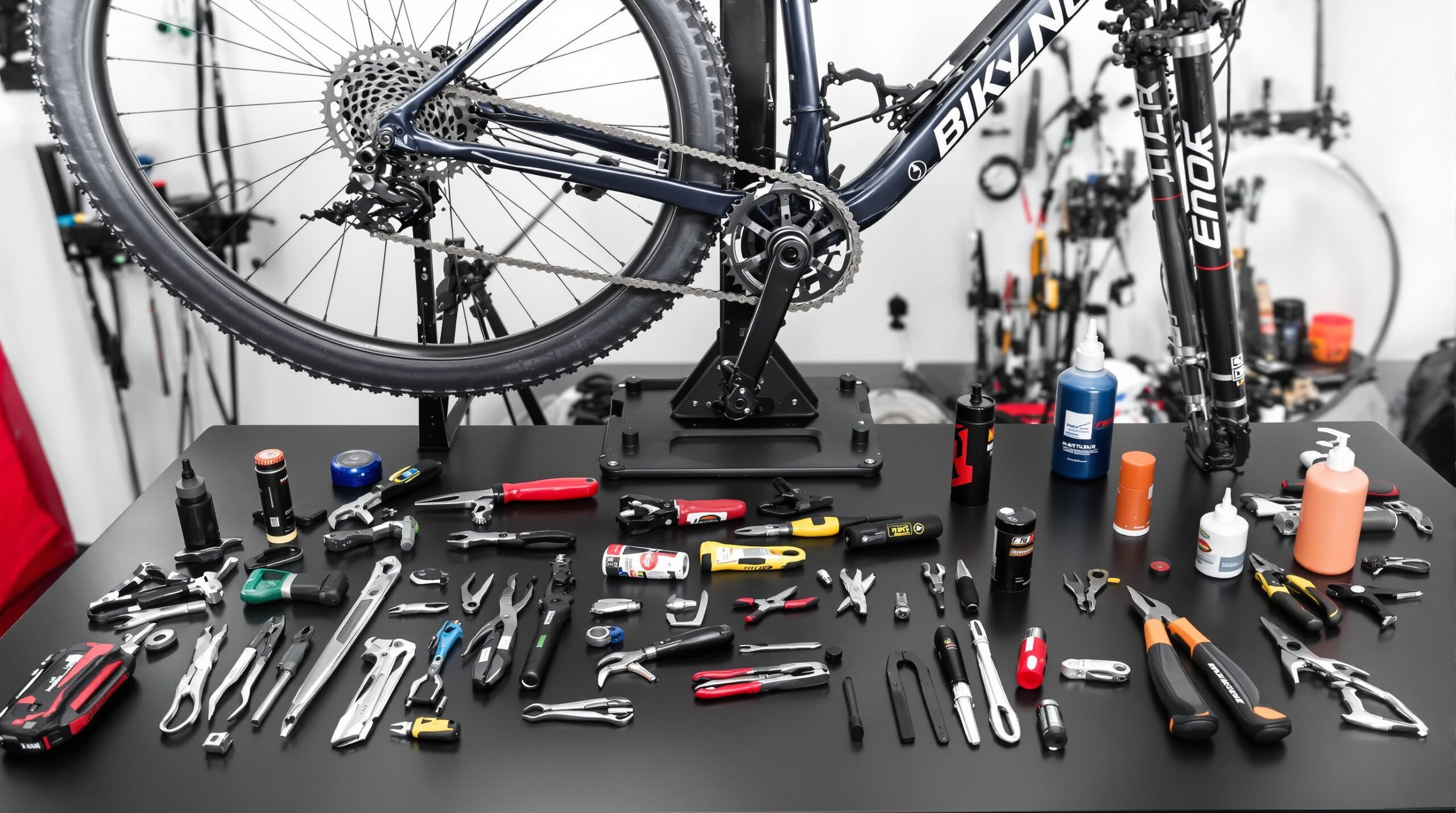
Build a comprehensive tool kit that handles most common maintenance tasks without requiring expensive professional-grade equipment. Essential tools include tire levers, patch kits, pumps, multi-tools, chain tools, and basic wrenches sized for bicycle components.
Quality tools perform better and last longer than bargain alternatives, making them worthwhile investments for regular maintenance. However, start with basic tools and add specialized equipment as skills and maintenance needs develop over time.
**Workspace Organization and Safety**
Organized workspace setup improves maintenance efficiency while reducing the risk of losing small parts or making mistakes during maintenance procedures. Good lighting, stable work surfaces, and systematic parts organization ensure successful maintenance sessions.
Consider portable workspace solutions if permanent shop space isn’t available. Folding workbenches, portable bike stands, and organized tool storage systems allow effective maintenance in garages, basements, or outdoor spaces when necessary.
## Developing Mechanical Knowledge and Skills
Building mechanical understanding and maintenance skills increases cycling independence while reducing long-term costs and improving bicycle performance through attentive care and early problem identification.
**Learning Resources and Skill Development**
Numerous resources support maintenance skill development, from online tutorials to hands-on workshops offered by bike shops and cycling organizations. Start with basic skills and gradually develop more advanced capabilities as confidence and knowledge grow.
Practice maintenance skills during calm periods rather than waiting for emergency situations when stress and time pressure can lead to mistakes or incomplete repairs that compromise safety or performance.
**Understanding Personal Limitations**
Recognize personal skill limitations to prevent damage that occurs when attempting maintenance beyond current capabilities. Professional mechanics have specialized tools, training, and experience that make complex repairs safer and more effective than amateur attempts.
Develop relationships with trusted bike shops that provide professional service when needed while supporting learning through advice and parts availability. Good bike shops welcome customers who perform basic maintenance while seeking professional help for complex issues.
Regular bicycle maintenance represents an investment in safety, performance, and cycling enjoyment that pays dividends through reduced costs, improved reliability, and greater mechanical understanding. Developing consistent maintenance habits builds confidence while preventing small issues from becoming major problems that compromise safety or require expensive repairs.
The goal is not to become a professional mechanic, but to develop sufficient knowledge and skills to maintain your bicycle properly while recognizing when professional service ensures optimal performance and safety. Consistent care creates reliable, enjoyable cycling experiences while supporting long-term cycling participation and equipment investment protection.