
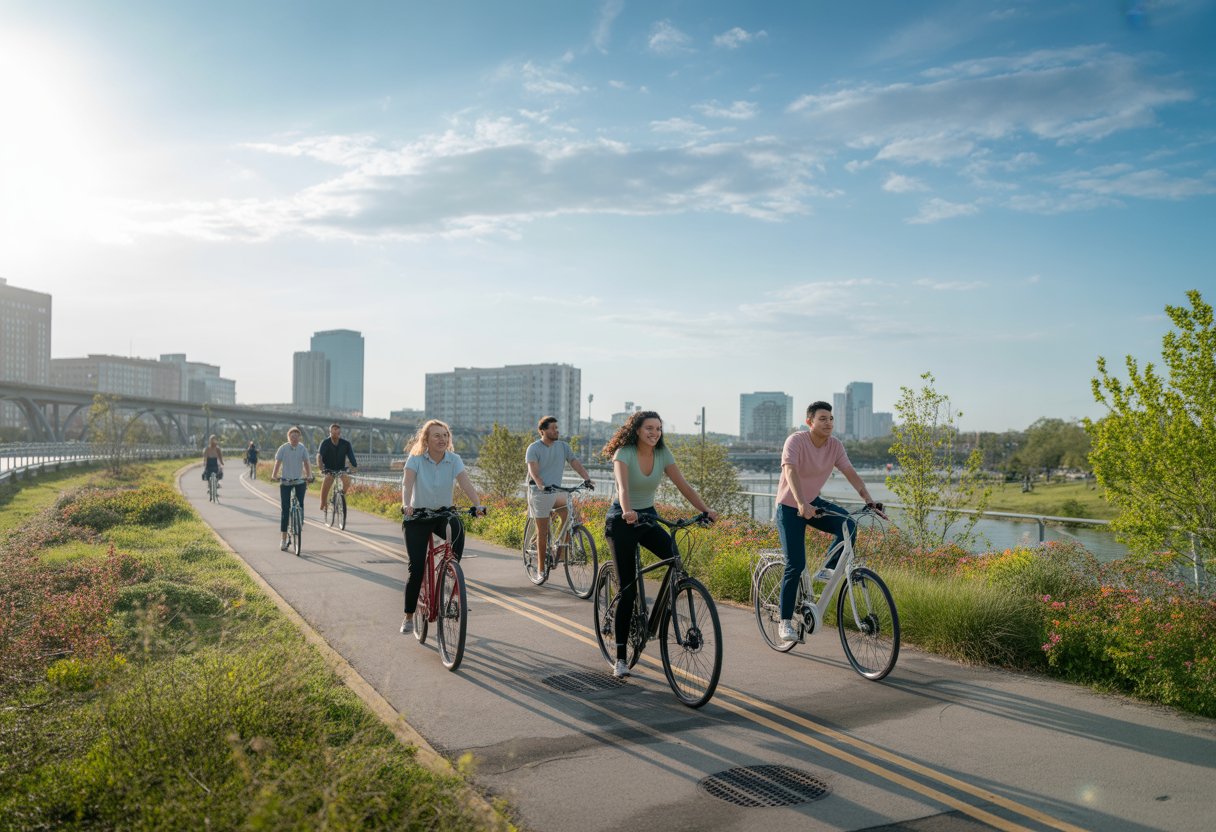

# Urban Cycling Revolution: How Cities Are Transforming Streets for Bicycles
Cities worldwide are experiencing a fundamental transformation in transportation infrastructure and urban planning philosophy, with bicycle-friendly design becoming central to creating livable, sustainable, and economically vibrant urban environments that prioritize human-scale mobility over automobile dominance.
## The Shift Toward Bicycle-Friendly Urban Design
Modern urban planning increasingly recognizes bicycles as essential components of sustainable transportation systems that address multiple challenges including climate change, public health, economic development, and quality of life improvements that benefit entire communities.
**Infrastructure Investment and Protected Cycling Networks**
Cities are investing heavily in protected cycling infrastructure that provides safe, comfortable, and convenient routes for cyclists of all ages and abilities while creating networks that connect residential areas, employment centers, and commercial districts through dedicated cycling facilities.
Protected bike lanes, cycling bridges, and intersection improvements demonstrate municipal commitment to cycling while providing infrastructure that encourages cycling adoption among residents who previously considered cycling too dangerous or inconvenient for daily transportation needs.
**Integration with Public Transportation Systems**
Progressive cities are creating seamless integration between cycling and public transportation through bike parking at transit stations, bike-friendly train cars, and coordinated scheduling that allows cyclists to combine cycling with mass transit for longer distances.
This integration extends cycling’s practical range while reducing automobile dependency for trips that exceed comfortable cycling distances, creating comprehensive transportation systems that provide alternatives to private car ownership for diverse urban mobility needs.
## Economic Benefits of Cycling Infrastructure
Investment in cycling infrastructure generates significant economic returns through reduced healthcare costs, increased property values, business development, and tourism revenues that justify infrastructure expenses while creating lasting community benefits.
**Local Business Development and Cycling Tourism**
Cycling infrastructure attracts businesses that cater to cycling customers while supporting cycling tourism that brings visitors and revenue to local communities. Bike shops, cafes, and cycling-friendly businesses often locate along popular cycling routes, creating economic corridors that benefit from cycling traffic.
Cycling tourists typically spend more per mile traveled than automobile tourists while supporting local businesses that provide authentic cultural experiences rather than standardized chain establishments that extract economic value from local communities.
**Property Value Enhancement and Neighborhood Development**
Well-designed cycling infrastructure increases property values while making neighborhoods more attractive to residents who value active transportation options and car-free lifestyle possibilities that support community interaction and environmental sustainability.
Cycling infrastructure often catalyzes broader neighborhood improvements including pedestrian facilities, public spaces, and mixed-use development that creates vibrant communities where people want to live, work, and spend time.
Urban cycling infrastructure represents more than transportation improvement – it embodies comprehensive approaches to city planning that prioritize human-scale development, environmental sustainability, and community vitality over automobile convenience and suburban sprawl patterns that have proven unsustainable economically and environmentally.